Gregory Johnston

CETI Off to a Quick Start in 2026

This is an exciting time to be part of the Clean Energy Transition Institute (CETI) with many changes underway. We are thrilled to welcome Dr. Glenn Blackmon to the CETI Board of Directors. Glenn has been a close CETI partner since the organization’s early days, having worked with us on the Washington 2021 State Energy Strategy, the Washington State Industrial Emissions Analysis, the Green Electrolytic Hydrogen and Renewable Fuels study, Operation 2030, and so much more. We are thrilled to be able to tap his expertise on the CETI Board.

We also want to share that our ace Research Analyst, Ruby Moore-Bloom, is on maternity leave as of February 20! We eagerly await news of the baby’s arrival and Ruby’s return to the CETI team on September 1.

We received word last week of a $100,000 general operating support grant from the Stolte Family Foundation (SFF) for 2026. The SFF’s continued investment in CETI is a huge financial boost for us and we are deeply grateful for it.

I want to remind everyone who has not yet done so to please fill out our evaluation survey. We are serious about learning how CETI's work is resonating with our community or can be improved. We would be so grateful if you could carve out five minutes to complete the survey.

We have had an enthusiastic response with 115 registrants for the first webinar in our "Buildings Don’t Decarbonize Themselves, People Do" series. You won’t want to miss this opportunity to learn how the social and behavioral sciences can inform building decarbonization efforts.

Finally, a big thank-you to the many people who reached out in response to the announcement of my decision to step down from CETI this summer. I am humbled by the emails and texts I have received. I look forward to continuing to collaborate with all in the Northwest clean energy ecosystem as well as with CETI. My work is far from done.

Eileen V. Quigley
Executive Director

Program Updates

SCALE 2030

Work continues on the SCALE 2030 Roadmap, which will detail the critical actions needed to accelerate building decarbonization in Washington by 2030. January marked the second meeting with our Advisory Group members, who provided high-level feedback and insight on the eight major levers and actions identified by the SCALE 2030 Team. We look forward to launching the Roadmap on a new SCALE 2030 website later this spring.

Northwest Clean Energy Atlas

Research Analyst Ruby Moore-Bloom recorded her presentation from the series of Lunch and Learns that CETI hosted in 2025 to explain what the Northwest Clean Energy Atlas is and how to navigate its interactive visualizations. Check it out and then go explore the Atlas for yourself!

Decarbonization Forums

  • Last month, CETI put on a Decarbonization Forum at K&L Gates in downtown Seattle. "Addressing Aviation’s Climate Impacts" convened policymakers, regulators, businesspeople, and clean energy advocates to explore the progress, pathways, opportunities, and challenges to abating aviation’s climate impacts in the Northwest. You can watch the recording and explore other resources from the event on our website.

  • On Thursday, March 5, CETI will kick off a new webinar series, "Buildings Don’t Decarbonize Themselves, People Do," that will explore the intersection between building decarbonization and the behavioral and social sciences.

    The first webinar in the series will provide a broad view of behavioral science theories and methods and how they are relevant to building decarbonization. The session will also dig into residential electrification decision-making and how behavioral science can support electrification.

    CETI Research Director Dr. Stacia Dreyer will moderate the discussion with presentations from Dr. Reuven Sussman (Director of the Behavior, Health and Human Dimensions Program - ACEEE) and Dr. Beth Karlin (Founder and CEO - See Change Institute). Register here.

Featured Work: WestTEC 10-Year Horizon Report

The Western Transmission Expansion Coalition (WestTEC) released the West-Wide Transmission Study 10-Year Horizon Report to the public on February 4, 2026, which modeled the transmission upgrades required to meet the West’s forecasted energy needs by 2035.

Facing unprecedented load growth, significant new planned energy resources, and increasing reliance on regional power transfers, the study finds that the West needs more than 12,600 miles of high-voltage transmission additions or upgrades to meet future energy demand.

WestTEC brought together more than 70 regional partners from a broad swath of energy industry sectors to develop this report. CETI has been deeply engaged in this project, with CETI Board members Crystal Ball on the Steering Committee and Robb Davis co-chairing the Regional Engagement Committee (REC), as well as CETI staff Eileen V. Quigley and Jeanne Currie serving on the REC.

Explore the WestTEC resources below to learn more:

Demystifying Decarbonization

As a primer to the first webinar in our “Buildings Don’t Decarbonize Themselves, People Do” series, Research Director Stacia Dreyer wrote a blog discussing ‘the missing human element’ and how the behavioral and social sciences can be powerful tools to address barriers to building decarbonization that are related to human behavior and decision-making.

CETI Website Updates

We have made several exciting updates to the CETI website:

  • Decarbonization Forums Program: A new Decarbonization Forums program page highlights CETI’s convenings – from data center energy use to emissions accounting and more.
  • Transmission Program: We added a Transmission program page for our work on WestTEC and a new project for 2026 to explain what Washington state’s transmission challenges and opportunities are.
  • Oregon Energy Strategy: We updated the Oregon Energy Strategy project page to feature our work on this project with the Oregon Department of Energy.
  • 2026 Updated Case Statement: We have updated our About CETI resource to reflect our 2026 work. It can be found at the bottom of our Mission page.

In Case You Missed It

The Clean Energy Tax Credit Assistance Program (CETCAP), administered through the Washington Department of Commerce, provides free legal, technical, and filing support for qualified projects statewide, helping reduce the cost of essential clean-energy upgrades.

CETCAP is open to Washington schools, hospitals, tribes, municipalities, and other tax-exempt institutions. Through federal elective pay, eligible entities can receive cash payments after completing approved projects, typically covering about 30% of project costs, with bonus credits that can increase savings up to as much as 70%.

CETCAP can help determine eligibility, plan projects, meet compliance deadlines, navigate complex qualification rules, and prepare accurate filings. You can submit an intake form to schedule a 30-minute introductory call.

Stay Tuned. . .  

  • The Oregon Department of Energy is inviting public input for a report on reducing barriers to large-scale clean energy development that would balance public participation with the state’s interest in accelerating clean energy infrastructure:
    • Log-in information for two listening sessions on March 3, 2026 from 1:00pm – 2:00pm and 5:00pm – 6:00pm can be found here.
    • Written comments may be submitted online by 5:00p.m. on March 20, 2026.
  • Learn more about maximizing federal clean energy tax credits and other Washington-specific resources in a free webinar hosted by the Municipal Research and Services Center (MRSC): March 26, 2026, 12:00pm – 1:30pm. Register here.
  • The Washington Department of Ecology is hosting a series of workshops to hear perspectives on geothermal energy development in the following areas:
    • Mount Baker area: February 26, 2026, 5:30pm – 7:30pm, in Classroom 107/108 of the Syre Student Center, Whatcom Community College (235 W. Kellogg Rd, Bellingham, WA 98226)
    • Mount St. Helens area: March 4, 2026, 5:30pm – 7:30pm, in the Woodland Community Center (782 Park Street, Woodland, WA 98674)
    • Wind River Valley area: March 5, 2026, 5:30pm – 7:30pm, in the Gallery Meeting Room at the Stevenson Community Library (120 NW Vancouver Ave, Stevenson, WA 98648)
    • If you are unable to attend the in-person workshops, you can join a virtual statewide workshop: March 17, 2026, 1:30pm to 3:30pm. Register here.

If you want to receive updates from CETI straight to your inbox, subscribe here.

Open in new

Eileen V. Quigley

Founding Executive Director
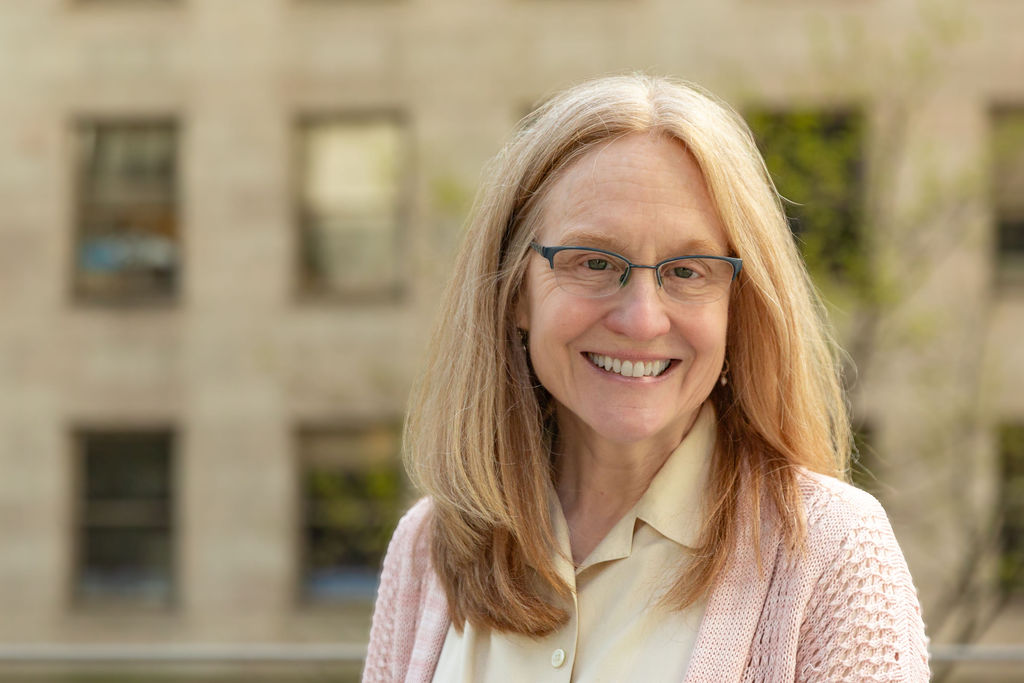
Eileen V. Quigley is the Founding Executive Director of the Clean Energy Transition Institute (CETI), which works to accelerate an equitable clean energy transition in the Northwest, and has led CETI’s programs since 2018. Eileen has researched and written extensively about a wide range of decarbonization solutions since 2009, publishing numerous papers, reports, and blogs, and she speaks regularly about decarbonization solutions throughout the Northwest. Prior to founding CETI, Eileen spent seven years as Director of Strategic Innovation at Climate Solutions, where she oversaw programs that identified transition pathways off fossil fuels to a low-carbon future in Washington, Idaho, Oregon, and Montana and advanced clean energy solutions in cities and rural areas, aviation, carbon sequestration, and the electricity grid.
FULL BIO & OTHER POSTS

CETI Off to a Quick Start in 2026

This is an exciting time to be part of the Clean Energy Transition Institute (CETI) with many changes underway. We are thrilled to welcome Dr. Glenn Blackmon to the CETI Board of Directors. Glenn has been a close CETI partner since the organization’s early days, having worked with us on the Washington 2021 State Energy Strategy, the Washington State Industrial Emissions Analysis, the Green Electrolytic Hydrogen and Renewable Fuels study, Operation 2030, and so much more. We are thrilled to be able to tap his expertise on the CETI Board.

We also want to share that our ace Research Analyst, Ruby Moore-Bloom, is on maternity leave as of February 20! We eagerly await news of the baby’s arrival and Ruby’s return to the CETI team on September 1.

We received word last week of a $100,000 general operating support grant from the Stolte Family Foundation (SFF) for 2026. The SFF’s continued investment in CETI is a huge financial boost for us and we are deeply grateful for it.

I want to remind everyone who has not yet done so to please fill out our evaluation survey. We are serious about learning how CETI's work is resonating with our community or can be improved. We would be so grateful if you could carve out five minutes to complete the survey.

We have had an enthusiastic response with 115 registrants for the first webinar in our "Buildings Don’t Decarbonize Themselves, People Do" series. You won’t want to miss this opportunity to learn how the social and behavioral sciences can inform building decarbonization efforts.

Finally, a big thank-you to the many people who reached out in response to the announcement of my decision to step down from CETI this summer. I am humbled by the emails and texts I have received. I look forward to continuing to collaborate with all in the Northwest clean energy ecosystem as well as with CETI. My work is far from done.

Eileen V. Quigley
Executive Director

Program Updates

SCALE 2030

Work continues on the SCALE 2030 Roadmap, which will detail the critical actions needed to accelerate building decarbonization in Washington by 2030. January marked the second meeting with our Advisory Group members, who provided high-level feedback and insight on the eight major levers and actions identified by the SCALE 2030 Team. We look forward to launching the Roadmap on a new SCALE 2030 website later this spring.

Northwest Clean Energy Atlas

Research Analyst Ruby Moore-Bloom recorded her presentation from the series of Lunch and Learns that CETI hosted in 2025 to explain what the Northwest Clean Energy Atlas is and how to navigate its interactive visualizations. Check it out and then go explore the Atlas for yourself!

Decarbonization Forums

  • Last month, CETI put on a Decarbonization Forum at K&L Gates in downtown Seattle. "Addressing Aviation’s Climate Impacts" convened policymakers, regulators, businesspeople, and clean energy advocates to explore the progress, pathways, opportunities, and challenges to abating aviation’s climate impacts in the Northwest. You can watch the recording and explore other resources from the event on our website.

  • On Thursday, March 5, CETI will kick off a new webinar series, "Buildings Don’t Decarbonize Themselves, People Do," that will explore the intersection between building decarbonization and the behavioral and social sciences.

    The first webinar in the series will provide a broad view of behavioral science theories and methods and how they are relevant to building decarbonization. The session will also dig into residential electrification decision-making and how behavioral science can support electrification.

    CETI Research Director Dr. Stacia Dreyer will moderate the discussion with presentations from Dr. Reuven Sussman (Director of the Behavior, Health and Human Dimensions Program - ACEEE) and Dr. Beth Karlin (Founder and CEO - See Change Institute). Register here.

Featured Work: WestTEC 10-Year Horizon Report

The Western Transmission Expansion Coalition (WestTEC) released the West-Wide Transmission Study 10-Year Horizon Report to the public on February 4, 2026, which modeled the transmission upgrades required to meet the West’s forecasted energy needs by 2035.

Facing unprecedented load growth, significant new planned energy resources, and increasing reliance on regional power transfers, the study finds that the West needs more than 12,600 miles of high-voltage transmission additions or upgrades to meet future energy demand.

WestTEC brought together more than 70 regional partners from a broad swath of energy industry sectors to develop this report. CETI has been deeply engaged in this project, with CETI Board members Crystal Ball on the Steering Committee and Robb Davis co-chairing the Regional Engagement Committee (REC), as well as CETI staff Eileen V. Quigley and Jeanne Currie serving on the REC.

Explore the WestTEC resources below to learn more:

Demystifying Decarbonization

As a primer to the first webinar in our “Buildings Don’t Decarbonize Themselves, People Do” series, Research Director Stacia Dreyer wrote a blog discussing ‘the missing human element’ and how the behavioral and social sciences can be powerful tools to address barriers to building decarbonization that are related to human behavior and decision-making.

CETI Website Updates

We have made several exciting updates to the CETI website:

  • Decarbonization Forums Program: A new Decarbonization Forums program page highlights CETI’s convenings – from data center energy use to emissions accounting and more.
  • Transmission Program: We added a Transmission program page for our work on WestTEC and a new project for 2026 to explain what Washington state’s transmission challenges and opportunities are.
  • Oregon Energy Strategy: We updated the Oregon Energy Strategy project page to feature our work on this project with the Oregon Department of Energy.
  • 2026 Updated Case Statement: We have updated our About CETI resource to reflect our 2026 work. It can be found at the bottom of our Mission page.

In Case You Missed It

The Clean Energy Tax Credit Assistance Program (CETCAP), administered through the Washington Department of Commerce, provides free legal, technical, and filing support for qualified projects statewide, helping reduce the cost of essential clean-energy upgrades.

CETCAP is open to Washington schools, hospitals, tribes, municipalities, and other tax-exempt institutions. Through federal elective pay, eligible entities can receive cash payments after completing approved projects, typically covering about 30% of project costs, with bonus credits that can increase savings up to as much as 70%.

CETCAP can help determine eligibility, plan projects, meet compliance deadlines, navigate complex qualification rules, and prepare accurate filings. You can submit an intake form to schedule a 30-minute introductory call.

Stay Tuned. . .  

  • The Oregon Department of Energy is inviting public input for a report on reducing barriers to large-scale clean energy development that would balance public participation with the state’s interest in accelerating clean energy infrastructure:
    • Log-in information for two listening sessions on March 3, 2026 from 1:00pm – 2:00pm and 5:00pm – 6:00pm can be found here.
    • Written comments may be submitted online by 5:00p.m. on March 20, 2026.
  • Learn more about maximizing federal clean energy tax credits and other Washington-specific resources in a free webinar hosted by the Municipal Research and Services Center (MRSC): March 26, 2026, 12:00pm – 1:30pm. Register here.
  • The Washington Department of Ecology is hosting a series of workshops to hear perspectives on geothermal energy development in the following areas:
    • Mount Baker area: February 26, 2026, 5:30pm – 7:30pm, in Classroom 107/108 of the Syre Student Center, Whatcom Community College (235 W. Kellogg Rd, Bellingham, WA 98226)
    • Mount St. Helens area: March 4, 2026, 5:30pm – 7:30pm, in the Woodland Community Center (782 Park Street, Woodland, WA 98674)
    • Wind River Valley area: March 5, 2026, 5:30pm – 7:30pm, in the Gallery Meeting Room at the Stevenson Community Library (120 NW Vancouver Ave, Stevenson, WA 98648)
    • If you are unable to attend the in-person workshops, you can join a virtual statewide workshop: March 17, 2026, 1:30pm to 3:30pm. Register here.

If you want to receive updates from CETI straight to your inbox, subscribe here.

Eileen V. Quigley

Founding Executive Director
Eileen V. Quigley is the Founding Executive Director of the Clean Energy Transition Institute (CETI), which works to accelerate an equitable clean energy transition in the Northwest, and has led CETI’s programs since 2018. Eileen has researched and written extensively about a wide range of decarbonization solutions since 2009, publishing numerous papers, reports, and blogs, and she speaks regularly about decarbonization solutions throughout the Northwest. Prior to founding CETI, Eileen spent seven years as Director of Strategic Innovation at Climate Solutions, where she oversaw programs that identified transition pathways off fossil fuels to a low-carbon future in Washington, Idaho, Oregon, and Montana and advanced clean energy solutions in cities and rural areas, aviation, carbon sequestration, and the electricity grid.
Full Bio & Other Posts

Get the latest updates from CETI directly to your inbox.

Related Posts