f11photo

CETI's Next Chapter

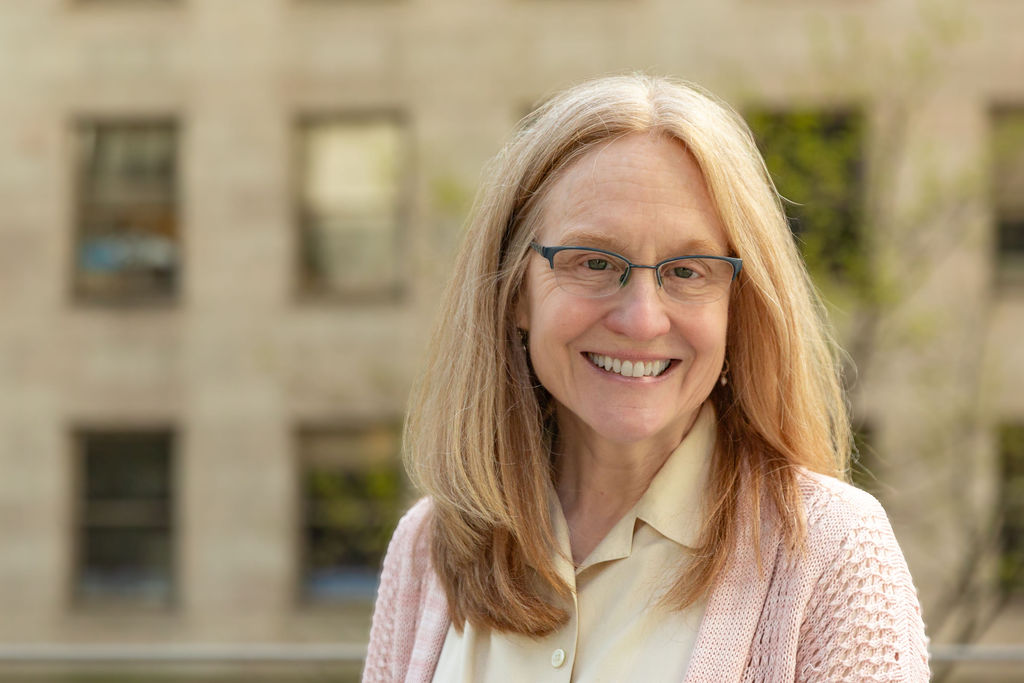
The time has come for me to bid farewell to the Clean Energy Transition Institute (CETI) community. A decade ago, I left my position as Climate Solutions’ Director of Strategic Innovation determined to answer what I thought at the time was a relatively simple question—namely, was it possible for the four Northwest states to decarbonize technically, economically, and equitably within the time that the climate science indicated we must?

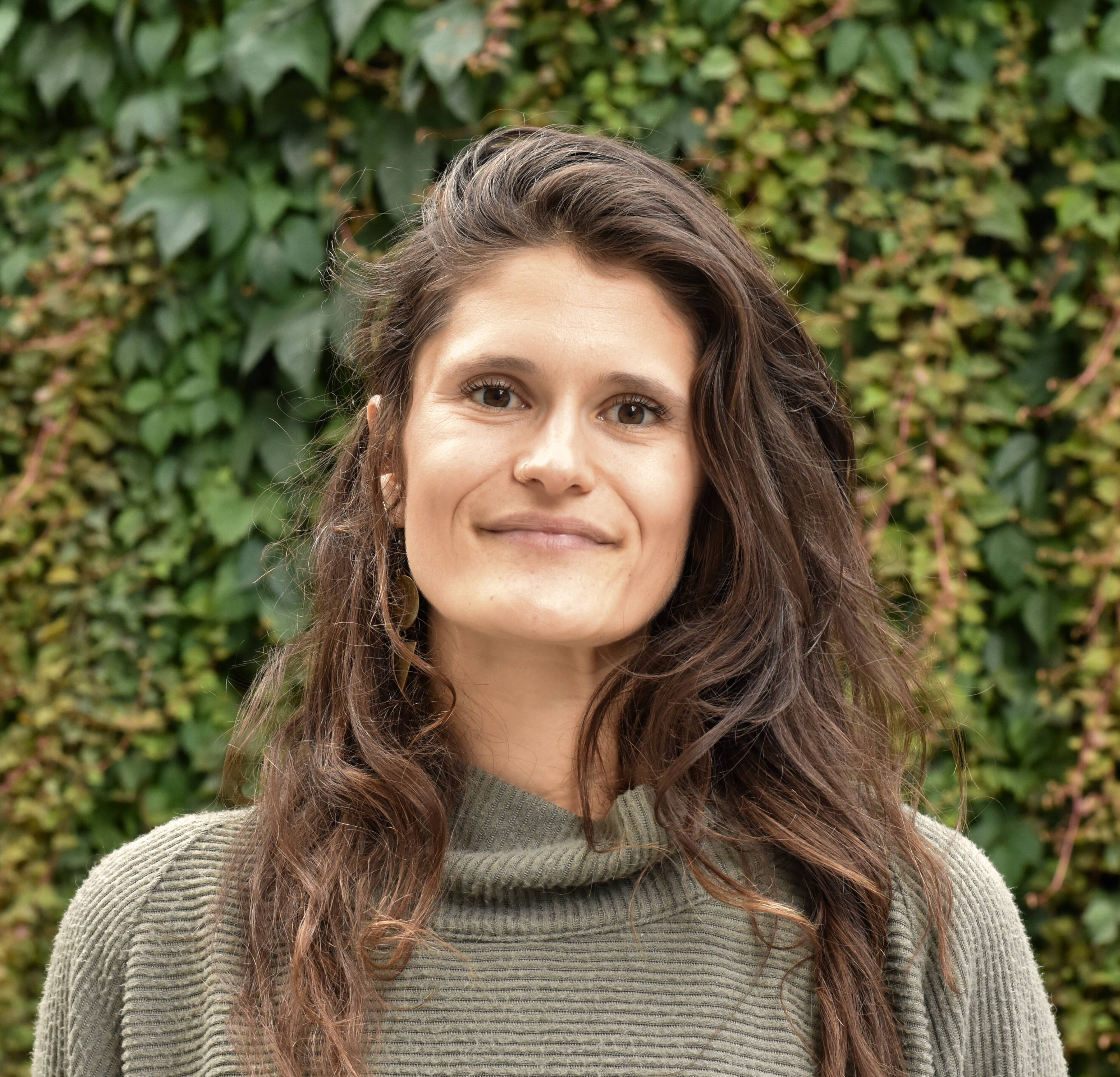
The quest to understand the multifaceted answer(s) to that question became the animating vision for CETI and with the support of this community and our very generous funders, I and the CETI Team have worked very hard for the past eight years researching, analyzing, and communicating what we learned. Despite tremendous improvements in the viability of renewable and other clean energy resources, storage, and a wide range of decarbonization solutions, that question still bears examination. I am therefore thrilled that the CETI Board has chosen Becky Kelley to succeed me as I believe that she has exactly the expertise and skill to skipper the CETI ship into the future.

I am doing everything in my power to enable a seamless transition this month and next and will be on call as needed in the months ahead. I feel quite confident that CETI is in excellent hands not only with Becky at the helm, but also with our superb Board and talented team. My last day is Friday, July 31, and Becky will be at my desk on Monday morning, August 3. I will provide support in August as Becky and the team transition.

Speaking of the team, I am incredibly excited to share the news that CETI’s Director of Operations and Communications Jamie Ptacek will attend the UC Berkeley School of Law starting August 17 on a full-ride scholarship for students dedicated to public interest law. While losing Jamie’s brilliant communication skills and steady operations support is hard, we are so pleased she is able to pursue her professional goals and confident that she is going to make an astounding lawyer.

We kicked off our Buildings Don’t Decarbonize Themselves, People Do webinar series on July 21 with an excellent webinar that CETI Research Director Stacia Dreyer moderated. The panelists talked about how to apply behavioral science to building decarbonization. See below for more information on this, how you can watch the recording, and how to register for the next session.

Stacia is serving on the NW Energy Coalition’s Data Center Working Group, the goal of which is to identify points of consensus with this rapidly emerging policy issue and support resource sharing among members.

As I close my final CETI Newsletter and this chapter of my life, I want to express my deep appreciation for every CETI staff member and contractor, past and present, who comprise the team that built CETI. During my tenure, we had a total of 16 staff and interns, seven Research Fellows, and 27 contractors who did the hard work to produce CETI’s research and analytics. I learned so much from every single person. I was also blessed with 10 skilled and dedicated Board members and an eight-member Advisory Council that helped launch CETI with the Northwest Deep Decarbonization Pathways Study, which set us off on this journey together.

Thank you to everyone from the bottom of my heart for your support and engagement since we opened for business on February 7, 2018. CETI is the crowning achievement of my now rather long career, and I could not have built it without the CETI community. I cannot wait to see where CETI goes from here.

With immense gratitude,
Eileen V. Quigley
CETI Executive Director

Program Updates

SCALE 2030

Next week, Poppy Storm will present the SCALE 2030 Clean Buildings Roadmap for Washington at ACEEE’s 2026 Summer Study on Energy Efficiency in Buildings on behalf of the SCALE 2030 team. The team continues to focus on Roadmap implementation and is scoping out next steps and funding opportunities to advance each of the actions in the Roadmap.

Webinar Series: Buildings Don’t Decarbonize Themselves

We launched our Buildings Don’t Decarbonize Themselves, People Do webinar series this month with presentations from Dr. Reuven Sussman (ACEEE) and Dr. Beth Karlin (See Change Institute), moderated by Stacia. The session provided a broad view of behavioral science theories and methods and their relevance to building decarbonization, digging into residential electrification decision making and how behavioral science can enhance electrification efforts across the customer journey.

The next session, The Human Side of Heat Pumps: Behavioral Insights for Customers and Contractors, will take place on Wednesday, August 26 from 9:30-10:30am PT. The webinar will provide two parallel perspectives on the heat pump journey–that of a customer and a contractor. Four core questions will be answered from both perspectives based on social and behavioral science research informed by the technical specificities of heat pumps: 1) What are heat pumps and why should I care?; 2) Will they work in my/this house?; 3) What will it cost/how much should I charge?; and 4) How do I get one?

WA Transmission Assessment Brief

The Washington Transmission Assessment Brief that CETI Research Analyst Jeanne Currie and Eileen have been working on since May is in its final stages as we incorporate feedback from our readers. We will be releasing this product early in the fall, and it will also provide fodder for the Transmission 101 document we will write to accompany a Transmission Decarbonization Forum we plan to hold this fall.

WA Comprehensive Climate Action Plan

Dr. Jeremy Hargreaves did an excellent job presenting the final modeling results for the Washington Comprehensive Climate Action Plan (CCAP) at the July 27, 2026 Summer 2026 Quarterly Public meeting. Jeremy completed the final Technical Report in December 2025, which modeled the impact of the Trump Administration’s rollback of the Biden Administration’s clean energy incentives. Materials from all prior public meetings since the CCAP process kicked off on October 23, 2023 can be accessed here and the modeling data can be found here. Modeling work with Washington’s departments of Commerce and Ecology will continue into 2027.

Data Centers and Rural Communities

Aiko Chang finalized their work under CETI Research Fellow Mariah Caballero and with Eileen’s guidance, exploring the equity implications of data center development in the Northwest, particularly its impact on rural communities. They presented their poster the second week of this month at Wellesley College. Should final materials be made public in the future, CETI will post them on our website.

Featured Report: Frontline Perspectives on Hyperscale Data Centers

Yesterday, Front and Centered released a Communities Centered: Frontline Perspectives on Hyperscale Data Centers in Washington State with a public webinar. The report is the culmination of months of work by the organization and details lessons learned from conversations with frontline community leaders as well as potential strategies for addressing data center impacts on communities. Download the report below and check out the website for more information.

Demystifying Decarbonization: Final Mile Technologies

Modeling finds that the final clean energy generation added to achieve a zero-emission electricity system produces a “hockey stick” graphic of sharply rising costs in the late 2040’s and early 2050s. Planners often use an undefined, clean, firm resource as a general proxy for the resources that will close the gap, but there is a range of existing technologies increasingly positioned to go the final mile on the way to a zero-emissions grid.

For this month's Demystifying Decarbonization blog, Jeanne reviews some of the most often-discussed technologies, covering their progress towards commercialization and development in the Northwest region, as well as the role they might eventually play in cleaning our grid.

Worth a Listen or a Read

  • Open Circuit's “The new reality for data centers: No easy answers” is definitely well worth the listen. Recorded in front of a live audience and clocking in at only 34 minutes, Stephen Lacey discusses "powered land," community opposition, and finding energy with two seasoned renewable energy and data center developers, Holly Adams, SVP of energy at Beal Infrastructure, and Ian Black, SVP and global head of energy at Digital Reality. (Powered land is property that has access to high-capacity electrical power and can host, generate, and manage power.)
  • An equally interesting podcast on data centers and AI is Catalyst's "Inside the AI power wars," wherein host Shayle Kann talks with SemiAnalysis' Jeremie Eliahou Ontiveros about the hypercompetitive world of AI energy procurement. The discussion offered an inside peek at how the hyperscaler world is trying to solve its speed-to-power challenges.
  • The article "The Politics of Climate Possibility" highlights why providing visible evidence of successful governmental action (when warranted) is important to catalyze climate engagement, based on recently published research. Dr. Clasceanu and co-authors give examples from the clean energy sector and underscore the importance of perceived individual, collective, and governmental efficacy.
  • Latitude Media released a three-part series on the problem of home decarbonization in the United States. Throughout the series, Nate Adams does a great job highlighting key challenges and potential solutions to achieving residential building decarbonization.
  • In the GridLab article "Why California is Using Significantly Less Natural Gas for Producing Electricity," Ric O’Connell and Ed Smeloff break down how California has managed to decrease reliance on natural gas during the evening peak. Comparing similar days in June they show a drop in gas-fired generation from 18% of daily energy in 2025 to 5% in 2026. It isn’t just batteries; the newly launched Extended Day-Ahead Market and recent connection of the SunZia project have also had a significant impact.
  • Canary Media ran a piece on a first-of-a-kind New Jersey law that would expedite data center grid connection if the center operator paid for households to replace energy-consuming electric resistance space and water heaters with more efficient heat pumps or if they install rooftop solar and batteries. The law is called the Data Center Fair Share Act and is an approach that Rewiring America touted when releasing a report that found "installing heat pumps, solar, and batteries in homes could offset more than 93 gigawatts of anticipated AI-driven demand nationwide."
  • The excellent NRDC team released "More Than Just Flipping a Switch," a report that analyzes how electricity rate reform paired with targeted incentives can address the fact that producing industrial heat with electricity is more expensive than using natural gas under current electricity rate structures.
  • Heatmap had the exclusive on MIT’s "New Report Says Trump Hasn’t Squashed Biden’s Clean Energy Buildout," an interesting analysis that argues the energy transition is still largely on the trajectory that the Biden Administration’s Inflation Reduction Act laid out despite the Trump Administration’s attempt to derail it.
  • Finally, this Open Circuit pod “The off-grid data center fantasy” is worth a listen, if only for Stephen Lacey’s framing of the current data center divide that runs from timestamp 2:14 to 3:01 where he describes the topic the pod explores: how much behind-the-meter power will actually get built in the next few years and what will that power be? Voltus SVP Tim Hade, Jigar Shah, and Lacey engage in a very informative discussion about this lively data center debate.

Stay Tuned

  • The Washington State Energy Codes public comment is open from July 1 to August 4, 2026. Hybrid public hearings are scheduled on August 5, 2026 in Olympic, WA and August 7 in Spokane, WA; written testimony will be accepted until 11:59 PM on August 7, 2026; and final adoption for the Energy Codes is targeted for September 25, 2026. Learn more about how to participate, including how to sign up for oral testimony, here.
  • ACEEE’s 2026 Summer Study on Energy Efficiency in Buildings will take place August 2 to 7, 2026 in Pine Grove, CA. Learn more and register here. Poppy will present on the SCALE 2030 Roadmap.
  • The Northwest Power and Conservation Council is holding a public meeting in Seattle on August 11 and 12, 2026, running from 8:00 AM to 5:00 PM both days. The meetings will take place at the Hyatt Regency Seattle, located at 808 Howell Street. You can sign up for notification of the agenda.
  • Speaking of the 9th Power Plan, the NW Energy Coalition Part 2 webinar on the Plan will be August 24, 2026 from 11:00 AM-12:30 PM. You can register here.
  • The NW Energy Coalition’s Fall 2026 Conference will occur on October 15, 2026 in Seattle, WA. Stay tuned for details about the event program and registration.
  • The Smart Buildings Center will host its Smart Building Exchange 2026 Fall Conference November 9 to 10, 2026 in Seattle, WA. Learn more and register here.

If you want to receive updates from CETI straight to your inbox, subscribe here.

Open in new

Eileen V. Quigley

Founding Executive Director
Eileen V. Quigley is the Founding Executive Director of the Clean Energy Transition Institute (CETI), which works to accelerate an equitable clean energy transition in the Northwest, and has led CETI’s programs since 2018. Eileen has researched and written extensively about a wide range of decarbonization solutions since 2009, publishing numerous papers, reports, and blogs, and she speaks regularly about decarbonization solutions throughout the Northwest. Prior to founding CETI, Eileen spent seven years as Director of Strategic Innovation at Climate Solutions, where she oversaw programs that identified transition pathways off fossil fuels to a low-carbon future in Washington, Idaho, Oregon, and Montana and advanced clean energy solutions in cities and rural areas, aviation, carbon sequestration, and the electricity grid.
FULL BIO & OTHER POSTS

CETI's Next Chapter

The time has come for me to bid farewell to the Clean Energy Transition Institute (CETI) community. A decade ago, I left my position as Climate Solutions’ Director of Strategic Innovation determined to answer what I thought at the time was a relatively simple question—namely, was it possible for the four Northwest states to decarbonize technically, economically, and equitably within the time that the climate science indicated we must?

The quest to understand the multifaceted answer(s) to that question became the animating vision for CETI and with the support of this community and our very generous funders, I and the CETI Team have worked very hard for the past eight years researching, analyzing, and communicating what we learned. Despite tremendous improvements in the viability of renewable and other clean energy resources, storage, and a wide range of decarbonization solutions, that question still bears examination. I am therefore thrilled that the CETI Board has chosen Becky Kelley to succeed me as I believe that she has exactly the expertise and skill to skipper the CETI ship into the future.

I am doing everything in my power to enable a seamless transition this month and next and will be on call as needed in the months ahead. I feel quite confident that CETI is in excellent hands not only with Becky at the helm, but also with our superb Board and talented team. My last day is Friday, July 31, and Becky will be at my desk on Monday morning, August 3. I will provide support in August as Becky and the team transition.

Speaking of the team, I am incredibly excited to share the news that CETI’s Director of Operations and Communications Jamie Ptacek will attend the UC Berkeley School of Law starting August 17 on a full-ride scholarship for students dedicated to public interest law. While losing Jamie’s brilliant communication skills and steady operations support is hard, we are so pleased she is able to pursue her professional goals and confident that she is going to make an astounding lawyer.

We kicked off our Buildings Don’t Decarbonize Themselves, People Do webinar series on July 21 with an excellent webinar that CETI Research Director Stacia Dreyer moderated. The panelists talked about how to apply behavioral science to building decarbonization. See below for more information on this, how you can watch the recording, and how to register for the next session.

Stacia is serving on the NW Energy Coalition’s Data Center Working Group, the goal of which is to identify points of consensus with this rapidly emerging policy issue and support resource sharing among members.

As I close my final CETI Newsletter and this chapter of my life, I want to express my deep appreciation for every CETI staff member and contractor, past and present, who comprise the team that built CETI. During my tenure, we had a total of 16 staff and interns, seven Research Fellows, and 27 contractors who did the hard work to produce CETI’s research and analytics. I learned so much from every single person. I was also blessed with 10 skilled and dedicated Board members and an eight-member Advisory Council that helped launch CETI with the Northwest Deep Decarbonization Pathways Study, which set us off on this journey together.

Thank you to everyone from the bottom of my heart for your support and engagement since we opened for business on February 7, 2018. CETI is the crowning achievement of my now rather long career, and I could not have built it without the CETI community. I cannot wait to see where CETI goes from here.

With immense gratitude,
Eileen V. Quigley
CETI Executive Director

Program Updates

SCALE 2030

Next week, Poppy Storm will present the SCALE 2030 Clean Buildings Roadmap for Washington at ACEEE’s 2026 Summer Study on Energy Efficiency in Buildings on behalf of the SCALE 2030 team. The team continues to focus on Roadmap implementation and is scoping out next steps and funding opportunities to advance each of the actions in the Roadmap.

Webinar Series: Buildings Don’t Decarbonize Themselves

We launched our Buildings Don’t Decarbonize Themselves, People Do webinar series this month with presentations from Dr. Reuven Sussman (ACEEE) and Dr. Beth Karlin (See Change Institute), moderated by Stacia. The session provided a broad view of behavioral science theories and methods and their relevance to building decarbonization, digging into residential electrification decision making and how behavioral science can enhance electrification efforts across the customer journey.

The next session, The Human Side of Heat Pumps: Behavioral Insights for Customers and Contractors, will take place on Wednesday, August 26 from 9:30-10:30am PT. The webinar will provide two parallel perspectives on the heat pump journey–that of a customer and a contractor. Four core questions will be answered from both perspectives based on social and behavioral science research informed by the technical specificities of heat pumps: 1) What are heat pumps and why should I care?; 2) Will they work in my/this house?; 3) What will it cost/how much should I charge?; and 4) How do I get one?

WA Transmission Assessment Brief

The Washington Transmission Assessment Brief that CETI Research Analyst Jeanne Currie and Eileen have been working on since May is in its final stages as we incorporate feedback from our readers. We will be releasing this product early in the fall, and it will also provide fodder for the Transmission 101 document we will write to accompany a Transmission Decarbonization Forum we plan to hold this fall.

WA Comprehensive Climate Action Plan

Dr. Jeremy Hargreaves did an excellent job presenting the final modeling results for the Washington Comprehensive Climate Action Plan (CCAP) at the July 27, 2026 Summer 2026 Quarterly Public meeting. Jeremy completed the final Technical Report in December 2025, which modeled the impact of the Trump Administration’s rollback of the Biden Administration’s clean energy incentives. Materials from all prior public meetings since the CCAP process kicked off on October 23, 2023 can be accessed here and the modeling data can be found here. Modeling work with Washington’s departments of Commerce and Ecology will continue into 2027.

Data Centers and Rural Communities

Aiko Chang finalized their work under CETI Research Fellow Mariah Caballero and with Eileen’s guidance, exploring the equity implications of data center development in the Northwest, particularly its impact on rural communities. They presented their poster the second week of this month at Wellesley College. Should final materials be made public in the future, CETI will post them on our website.

Featured Report: Frontline Perspectives on Hyperscale Data Centers

Yesterday, Front and Centered released a Communities Centered: Frontline Perspectives on Hyperscale Data Centers in Washington State with a public webinar. The report is the culmination of months of work by the organization and details lessons learned from conversations with frontline community leaders as well as potential strategies for addressing data center impacts on communities. Download the report below and check out the website for more information.

Demystifying Decarbonization: Final Mile Technologies

Modeling finds that the final clean energy generation added to achieve a zero-emission electricity system produces a “hockey stick” graphic of sharply rising costs in the late 2040’s and early 2050s. Planners often use an undefined, clean, firm resource as a general proxy for the resources that will close the gap, but there is a range of existing technologies increasingly positioned to go the final mile on the way to a zero-emissions grid.

For this month's Demystifying Decarbonization blog, Jeanne reviews some of the most often-discussed technologies, covering their progress towards commercialization and development in the Northwest region, as well as the role they might eventually play in cleaning our grid.

Worth a Listen or a Read

  • Open Circuit's “The new reality for data centers: No easy answers” is definitely well worth the listen. Recorded in front of a live audience and clocking in at only 34 minutes, Stephen Lacey discusses "powered land," community opposition, and finding energy with two seasoned renewable energy and data center developers, Holly Adams, SVP of energy at Beal Infrastructure, and Ian Black, SVP and global head of energy at Digital Reality. (Powered land is property that has access to high-capacity electrical power and can host, generate, and manage power.)
  • An equally interesting podcast on data centers and AI is Catalyst's "Inside the AI power wars," wherein host Shayle Kann talks with SemiAnalysis' Jeremie Eliahou Ontiveros about the hypercompetitive world of AI energy procurement. The discussion offered an inside peek at how the hyperscaler world is trying to solve its speed-to-power challenges.
  • The article "The Politics of Climate Possibility" highlights why providing visible evidence of successful governmental action (when warranted) is important to catalyze climate engagement, based on recently published research. Dr. Clasceanu and co-authors give examples from the clean energy sector and underscore the importance of perceived individual, collective, and governmental efficacy.
  • Latitude Media released a three-part series on the problem of home decarbonization in the United States. Throughout the series, Nate Adams does a great job highlighting key challenges and potential solutions to achieving residential building decarbonization.
  • In the GridLab article "Why California is Using Significantly Less Natural Gas for Producing Electricity," Ric O’Connell and Ed Smeloff break down how California has managed to decrease reliance on natural gas during the evening peak. Comparing similar days in June they show a drop in gas-fired generation from 18% of daily energy in 2025 to 5% in 2026. It isn’t just batteries; the newly launched Extended Day-Ahead Market and recent connection of the SunZia project have also had a significant impact.
  • Canary Media ran a piece on a first-of-a-kind New Jersey law that would expedite data center grid connection if the center operator paid for households to replace energy-consuming electric resistance space and water heaters with more efficient heat pumps or if they install rooftop solar and batteries. The law is called the Data Center Fair Share Act and is an approach that Rewiring America touted when releasing a report that found "installing heat pumps, solar, and batteries in homes could offset more than 93 gigawatts of anticipated AI-driven demand nationwide."
  • The excellent NRDC team released "More Than Just Flipping a Switch," a report that analyzes how electricity rate reform paired with targeted incentives can address the fact that producing industrial heat with electricity is more expensive than using natural gas under current electricity rate structures.
  • Heatmap had the exclusive on MIT’s "New Report Says Trump Hasn’t Squashed Biden’s Clean Energy Buildout," an interesting analysis that argues the energy transition is still largely on the trajectory that the Biden Administration’s Inflation Reduction Act laid out despite the Trump Administration’s attempt to derail it.
  • Finally, this Open Circuit pod “The off-grid data center fantasy” is worth a listen, if only for Stephen Lacey’s framing of the current data center divide that runs from timestamp 2:14 to 3:01 where he describes the topic the pod explores: how much behind-the-meter power will actually get built in the next few years and what will that power be? Voltus SVP Tim Hade, Jigar Shah, and Lacey engage in a very informative discussion about this lively data center debate.

Stay Tuned

  • The Washington State Energy Codes public comment is open from July 1 to August 4, 2026. Hybrid public hearings are scheduled on August 5, 2026 in Olympic, WA and August 7 in Spokane, WA; written testimony will be accepted until 11:59 PM on August 7, 2026; and final adoption for the Energy Codes is targeted for September 25, 2026. Learn more about how to participate, including how to sign up for oral testimony, here.
  • ACEEE’s 2026 Summer Study on Energy Efficiency in Buildings will take place August 2 to 7, 2026 in Pine Grove, CA. Learn more and register here. Poppy will present on the SCALE 2030 Roadmap.
  • The Northwest Power and Conservation Council is holding a public meeting in Seattle on August 11 and 12, 2026, running from 8:00 AM to 5:00 PM both days. The meetings will take place at the Hyatt Regency Seattle, located at 808 Howell Street. You can sign up for notification of the agenda.
  • Speaking of the 9th Power Plan, the NW Energy Coalition Part 2 webinar on the Plan will be August 24, 2026 from 11:00 AM-12:30 PM. You can register here.
  • The NW Energy Coalition’s Fall 2026 Conference will occur on October 15, 2026 in Seattle, WA. Stay tuned for details about the event program and registration.
  • The Smart Buildings Center will host its Smart Building Exchange 2026 Fall Conference November 9 to 10, 2026 in Seattle, WA. Learn more and register here.

If you want to receive updates from CETI straight to your inbox, subscribe here.

Eileen V. Quigley

Founding Executive Director
Eileen V. Quigley is the Founding Executive Director of the Clean Energy Transition Institute (CETI), which works to accelerate an equitable clean energy transition in the Northwest, and has led CETI’s programs since 2018. Eileen has researched and written extensively about a wide range of decarbonization solutions since 2009, publishing numerous papers, reports, and blogs, and she speaks regularly about decarbonization solutions throughout the Northwest. Prior to founding CETI, Eileen spent seven years as Director of Strategic Innovation at Climate Solutions, where she oversaw programs that identified transition pathways off fossil fuels to a low-carbon future in Washington, Idaho, Oregon, and Montana and advanced clean energy solutions in cities and rural areas, aviation, carbon sequestration, and the electricity grid.
Full Bio & Other Posts

Get the latest updates from CETI directly to your inbox.

Related Posts