Chalabala

Decarbonization Forum Recap: Addressing Aviation’s Climate Impacts

Aviation currently accounts for 2-4% of global emissions of carbon dioxide (CO2) due to jet fuel combustion. With anticipated reductions in other sectors and forecasts for increased demand for aviation, it could account for up to 22% of global CO2 emissions by 2050.

Air travel also contributes to global warming through non-CO2 emissions and the formation of contrails, which increase high-altitude cloud formation and trap heat. These realities, coupled with aviation decarbonization targets and mandates from international entities such as the International Civil Aviation Organization (ICAO), the European Union, and the United Kingdom, have spurred interest in the development of climate solutions for aviation globally and the Northwest, where Oregon and Washington have set emissions reduction goals.

The Northwest has been a driving force towards more sustainable aviation, exemplified in a regional coordination process in 2011 among aviation industry leaders, researchers, and nonprofits that resulted in the ground breaking report, Sustainable Aviation Fuels Northwest: Powering the Next Generation of Flight (SAFN).

Shortly after the SAFN report, the Washington State Legislature established the Alternative Jet Fuels (AJF) Work Group to promote the production and use of sustainable aviation fuels in Washington, where aviation is a cornerstone of the state’s economy.

Additional successes include recognizing sustainable aviation fuels (SAFs) in Washington’s Clean Fuels Standard and Oregon’s Clean Fuels Program, as well as numerous SAF-specific legislative provisions. Parallel to these legislative efforts, various Northwest private industry groups have been making strides in sustainable aviation fuel production.

On January 29, 2026, the Clean Energy Transition Institute (CETI) hosted Addressing Aviation’s Climate Impacts, a Decarbonization Forum that convened policymakers, regulators, businesspeople, and clean energy advocates to have a focused conversation that explored the pathways, opportunities, and challenges to abating the climate impacts of aviation in theNorthwest. We filled the room at K&L Gates law firm, which sponsored the event in Seattle. The forum was comprised of two panels with moderated Q&A sessions after each.

Setting the Stage

The event began with CETI’s Executive Director Eileen V. Quigley giving a high-level overview of CETI’s work and describing how Decarbonization Forums are designed to demystify complex decarbonization issues and develop ways to break barriers to progress.

Eileen then introduced U.S. Senator Maria Cantwell, who gave pre-recorded remarks to kick off the forum. Senator Cantwell highlighted how Washington’s unique position in the aviation sector situates the state to lead on sustainable aviation solutions. Senator Cantwell also described her efforts to advance solutions to aviation’s climate impacts on the federal level to support Washington’s aviation sector.

Panel 1: Climate Solutions for Aviation

CETI Research Analyst Ruby Moore-Bloom moderated the first panel of the forum, which focused on an array of climate solutions for aviation. Panelists included: Ryan Faucett (The Boeing Company), Nikita Pavlenko (International Council on Clean Transportation), Michael P. Wolcott (Washington State University), Jason Humphrey (RMI), Stephanie Meyn (Port of Seattle), and Lauren Hogrewe (Washington Department of Commerce).

Ryan Faucett (The Boeing Company): Ryan provided an overview of the multiple ways that Boeing works to lower aviation industry emissions, including designing new aircraft to improve fuel efficiency, operational efficiency strategies to lower emissions while flying, advanced technology, market-based measures, and more. He then highlighted Boeing’s Cascade Climate Impact Model, an interactive tool to forecast emissions and explore various scenarios.

Nikita Pavlenko (International Council on Clean Transportation, ICCT): Nikita leads the Aviation and Fuels programs at ICCT and focused his presentation on a recent ICCT report that provides a global inventory of aviation emissions and policy scenario analysis through 2050 and highlights the importance of combining strategies that address both CO2 and non-CO2 emissions to fully address aviation’s contributions to global warming.

Nikita started with the importance of non-CO2 emissions, including contrail formation, when considering aviation’s climate impacts, explaining that reducing short-lived climate pollutants can have immediate near-term warming reductions.

Michael P. Wolcott (Washington State University): Michael discussed three main “baskets” of measures to reducing emissions from aviation: operational improvements, aircraft technology, and SAFs. He emphasized that it is crucial to focus on solutions that are scalable for long-haul flights (over 1,000 nautical miles), which represent a lower percentage of overall operations but a higher percentage of total fuel burn. He then discussed operational improvements that can be used to mitigate contrail formation, and technology improvements, such as aircraft efficiencies that have already contributed significantly to lowering emissions.

Finally, Michael emphasized that expected domestic SAF production capacity is much higher than what is currently being sold into the marketplace, pointing to the need to address challenges in scaling SAF production.

Jason Humphrey (RMI): Jason discussed RMI’s work accelerating net-zero aviation, focusing on efforts that aim to grow the SAF market. He introduced the concept of book and claim systems with SAF certificates, which separate environmental attributes from physical fuel. These certificates allow companies to invest in SAF production and receive environmental credit even if they are not buying the fuel themselves.

Jason also reiterated Michael’s point about the difference between potential capacity and production, citing RMI research that found approximately 40% of announced SAF production capacity is at risk of non-delivery due to various hurdles.

Stephanie Meyn (Port of Seattle): As the Climate Program Manager for Seattle-Tacoma International Airport, Stephanie discussed a range of methods the airport employs to address emissions from aviation. These include studying how the airport can integrate infrastructure to allow for receiving, storing, and blending facilities for SAFs, as well as machine learning tools to detect ground systems activities and reduce emissions.

One machine learning tool is used to detect the use of auxiliary power units (APUs), which are on-board generators that burn jet fuel and power the aircraft’s electrical system and air conditioning while at the gate. The airport uses technology to provide real-time monitoring of APU usage and determine whether aircraft are plugging into available ground systems (electrical and pre-conditioned air) rather than running their APUs with much higher emissions impacts.

Lauren Hogrewe (Washington Department of Commerce): Lauren, a Senior Energy Policy Specialist at the Office of Renewable Fuels, discussed key takeaways from Commerce reports related to clean fuels and gave an overview of Washington’s energy policy landscape relevant to SAF production. She also highlighted state manufacturing incentives, state funding to continue accelerating SAF production, and a technical assistance program for green hydrogen end users.

Finally, she emphasized the state’s support for research and development of new, low-carbon fuels, including through the Alternative Jet Fuel Work Group, the Sustainable Maritime Fuel Collaborative, and the recently launched Cascadia Sustainable Aviation Accelerator.

The panel concluded with Q&A and discussion, delving deeper into the importance of contrail mitigation and key advantages in the Northwest to address aviation’s climate impacts, especially in the face of federal uncertainty. The panelists concluded by each sharing one key action-oriented takeaway for the audience, which included economics; policy; financing projects; difficulty maintaining momentum after projects are announced or policies are passed; getting SAFs into the delivery system as smoothly as possible; and ensuring that SAF usage happens in state and Washingtonians benefit from SAF development.

Panel 2: Sustainable Aviation Fuels

The event then transitioned to a panel focused on SAFs, moderated by CETI Board Member Ross Macfarlane. Panelists included: Andy Billig (SkyNRG), S. Derek Phelps (Twelve), Courtney Unruh (Qantas), Lauren Kickham (Microsoft), and Tim Zenk (Earth Finance).

Andy Billig (SkyNRG): Andy started the panel with a presentation about SkyNRG’s Project Wigeon, a SAF facility located in Wallula, Washington. Project Wigeon uses renewable natural gas feedstock and existing Fischer-Tropsch technology to produce SAFs and recently reached a major milestone by receiving environmental approvals from the state. He also highlighted key reasons for SkyNRG to locate the facility in Washington, which include the state’s position as an aerospace and SAF hub, the state SAF tax incentive, the inclusion of SAFs in the Clean Fuel Standard, and general legislative and agency support for SAFs.

S. Derek Phelps (Twelve): Derek represents another SAF producer, Twelve, which is building a SAF demonstration plant in Moses Lake, Washington. The plant will produce E-Jet SAF using captured carbon and hydrogen as feedstock that can deliver a 90% reduction in carbon footprint compared to conventional jet fuel. Derek shared that Twelve has completed the Moses Lake plant and will start SAF production soon, aiming for a first flight with Alaska Airlines later this spring.

Courtney Unruh (Qantas): Courtney brought an airline perspective to the conversation from her work on SAFs with the Australian airline Qantas. She explained the key role that SAFs play in helping Qantas reach its climate targets and highlighted the importance of supportive and carefully designed policies. Courtney also explained the global nature of the SAF market to address why an Australian airline would be interested in SAF production in the U.S.

Lauren Kickham (Microsoft): Lauren explained how SAFs fit into Microsoft’s overall climate commitments and Scope 3 emissions, which comprise 97% of Microsoft’s total emissions. She then focused on how Microsoft is helping to build SAF markets through investment and procurement of SAF (through SAF certificates), highlighting the importance of the book and claim model.

Tim Zenk (Earth Finance): Tim rounded out the panel by sharing how the recently launched Cascadia Sustainable Aviation Accelerator is working to accelerate the production and adoption of sustainable aviation fuels, with a target of producing one billion gallons of SAFs by 2035. Cascadia focuses on addressing barriers to scaling SAFs in the region, including infrastructure challenges and uncertainty in offtake and financing.

Panelists then participated in a lively Q&A session, getting into more detail about what the SAF industry needs to scale, including how to share investment risk and the importance of policy certainty and consistency. Panelists also explored how to address public skepticism about biofuels and SAFs and how to ensure that SAFs are meeting sustainability criteria, including a discussion of different feedstocks and carbon accounting.

As with the first panel, speakers each shared one key action-oriented takeaway to make SAF scale in the region, which included asking one’s employer about purchasing Scope 3 SAF certificates for business travel; staying focused on policy at the state level; implementing risk-sharing mechanisms; the importance of not accepting the status quo and continuing to push forward on SAF innovation from every angle; and understanding that everybody has a role to play in helping SAF producers be successful in the region.

Additional Resources

You can find additional resources, including panelist slide decks, a recording of the event, and CETI’s Addressing Aviation’s Climate Impacts 101 paper here.


If you want to receive updates from CETI straight to your inbox, subscribe here.

Open in new

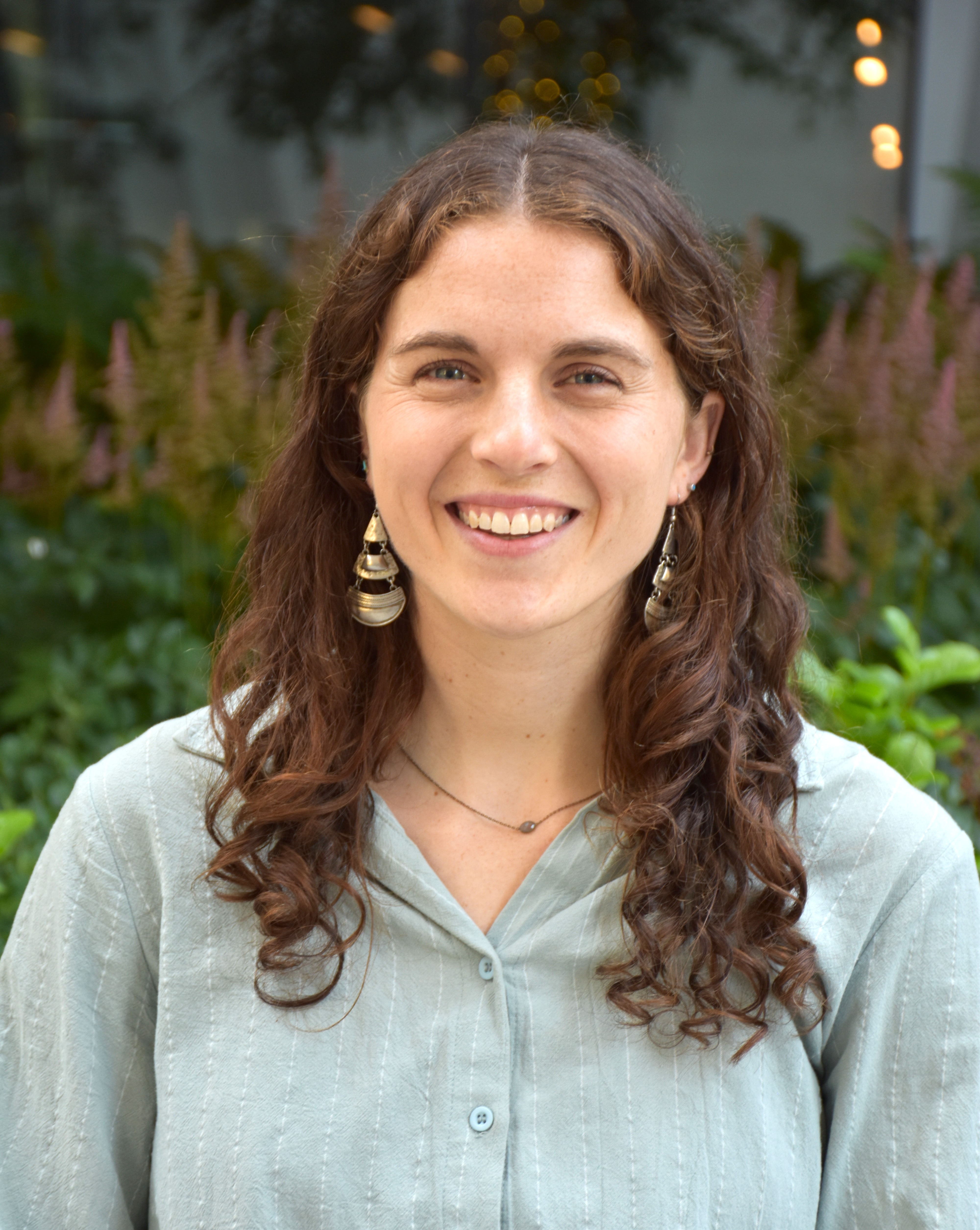
Ruby Moore-Bloom

Research Analyst
Ruby Moore-Bloom is a Research Analyst at CETI who serves as technical project manager and/or provides research support for all CETI contract projects. She oversees the Northwest Clean Energy Atlas, which explores energy data relevant to deep decarbonization in the Northwest in interactive data visualizations. She has led all follow-up work related to the NZNW Workforce Analysis, including the Washington Department of Commerce Residential Energy Efficiency Workforce Needs Assessment; the Washington Department of Commerce Washington Refinery Study; and the Renewable Northwest and BWR Offshore Wind Jobs Study. Ruby also led CETI’s Clean Materials Manufacturing project, which provided research for industrial stakeholders and policymakers to understand different methods for decarbonizing six of Washington state’s manufacturing sectors.
FULL BIO & OTHER POSTS

Decarbonization Forum Recap: Addressing Aviation’s Climate Impacts

Aviation currently accounts for 2-4% of global emissions of carbon dioxide (CO2) due to jet fuel combustion. With anticipated reductions in other sectors and forecasts for increased demand for aviation, it could account for up to 22% of global CO2 emissions by 2050.

Air travel also contributes to global warming through non-CO2 emissions and the formation of contrails, which increase high-altitude cloud formation and trap heat. These realities, coupled with aviation decarbonization targets and mandates from international entities such as the International Civil Aviation Organization (ICAO), the European Union, and the United Kingdom, have spurred interest in the development of climate solutions for aviation globally and the Northwest, where Oregon and Washington have set emissions reduction goals.

The Northwest has been a driving force towards more sustainable aviation, exemplified in a regional coordination process in 2011 among aviation industry leaders, researchers, and nonprofits that resulted in the ground breaking report, Sustainable Aviation Fuels Northwest: Powering the Next Generation of Flight (SAFN).

Shortly after the SAFN report, the Washington State Legislature established the Alternative Jet Fuels (AJF) Work Group to promote the production and use of sustainable aviation fuels in Washington, where aviation is a cornerstone of the state’s economy.

Additional successes include recognizing sustainable aviation fuels (SAFs) in Washington’s Clean Fuels Standard and Oregon’s Clean Fuels Program, as well as numerous SAF-specific legislative provisions. Parallel to these legislative efforts, various Northwest private industry groups have been making strides in sustainable aviation fuel production.

On January 29, 2026, the Clean Energy Transition Institute (CETI) hosted Addressing Aviation’s Climate Impacts, a Decarbonization Forum that convened policymakers, regulators, businesspeople, and clean energy advocates to have a focused conversation that explored the pathways, opportunities, and challenges to abating the climate impacts of aviation in theNorthwest. We filled the room at K&L Gates law firm, which sponsored the event in Seattle. The forum was comprised of two panels with moderated Q&A sessions after each.

Setting the Stage

The event began with CETI’s Executive Director Eileen V. Quigley giving a high-level overview of CETI’s work and describing how Decarbonization Forums are designed to demystify complex decarbonization issues and develop ways to break barriers to progress.

Eileen then introduced U.S. Senator Maria Cantwell, who gave pre-recorded remarks to kick off the forum. Senator Cantwell highlighted how Washington’s unique position in the aviation sector situates the state to lead on sustainable aviation solutions. Senator Cantwell also described her efforts to advance solutions to aviation’s climate impacts on the federal level to support Washington’s aviation sector.

Panel 1: Climate Solutions for Aviation

CETI Research Analyst Ruby Moore-Bloom moderated the first panel of the forum, which focused on an array of climate solutions for aviation. Panelists included: Ryan Faucett (The Boeing Company), Nikita Pavlenko (International Council on Clean Transportation), Michael P. Wolcott (Washington State University), Jason Humphrey (RMI), Stephanie Meyn (Port of Seattle), and Lauren Hogrewe (Washington Department of Commerce).

Ryan Faucett (The Boeing Company): Ryan provided an overview of the multiple ways that Boeing works to lower aviation industry emissions, including designing new aircraft to improve fuel efficiency, operational efficiency strategies to lower emissions while flying, advanced technology, market-based measures, and more. He then highlighted Boeing’s Cascade Climate Impact Model, an interactive tool to forecast emissions and explore various scenarios.

Nikita Pavlenko (International Council on Clean Transportation, ICCT): Nikita leads the Aviation and Fuels programs at ICCT and focused his presentation on a recent ICCT report that provides a global inventory of aviation emissions and policy scenario analysis through 2050 and highlights the importance of combining strategies that address both CO2 and non-CO2 emissions to fully address aviation’s contributions to global warming.

Nikita started with the importance of non-CO2 emissions, including contrail formation, when considering aviation’s climate impacts, explaining that reducing short-lived climate pollutants can have immediate near-term warming reductions.

Michael P. Wolcott (Washington State University): Michael discussed three main “baskets” of measures to reducing emissions from aviation: operational improvements, aircraft technology, and SAFs. He emphasized that it is crucial to focus on solutions that are scalable for long-haul flights (over 1,000 nautical miles), which represent a lower percentage of overall operations but a higher percentage of total fuel burn. He then discussed operational improvements that can be used to mitigate contrail formation, and technology improvements, such as aircraft efficiencies that have already contributed significantly to lowering emissions.

Finally, Michael emphasized that expected domestic SAF production capacity is much higher than what is currently being sold into the marketplace, pointing to the need to address challenges in scaling SAF production.

Jason Humphrey (RMI): Jason discussed RMI’s work accelerating net-zero aviation, focusing on efforts that aim to grow the SAF market. He introduced the concept of book and claim systems with SAF certificates, which separate environmental attributes from physical fuel. These certificates allow companies to invest in SAF production and receive environmental credit even if they are not buying the fuel themselves.

Jason also reiterated Michael’s point about the difference between potential capacity and production, citing RMI research that found approximately 40% of announced SAF production capacity is at risk of non-delivery due to various hurdles.

Stephanie Meyn (Port of Seattle): As the Climate Program Manager for Seattle-Tacoma International Airport, Stephanie discussed a range of methods the airport employs to address emissions from aviation. These include studying how the airport can integrate infrastructure to allow for receiving, storing, and blending facilities for SAFs, as well as machine learning tools to detect ground systems activities and reduce emissions.

One machine learning tool is used to detect the use of auxiliary power units (APUs), which are on-board generators that burn jet fuel and power the aircraft’s electrical system and air conditioning while at the gate. The airport uses technology to provide real-time monitoring of APU usage and determine whether aircraft are plugging into available ground systems (electrical and pre-conditioned air) rather than running their APUs with much higher emissions impacts.

Lauren Hogrewe (Washington Department of Commerce): Lauren, a Senior Energy Policy Specialist at the Office of Renewable Fuels, discussed key takeaways from Commerce reports related to clean fuels and gave an overview of Washington’s energy policy landscape relevant to SAF production. She also highlighted state manufacturing incentives, state funding to continue accelerating SAF production, and a technical assistance program for green hydrogen end users.

Finally, she emphasized the state’s support for research and development of new, low-carbon fuels, including through the Alternative Jet Fuel Work Group, the Sustainable Maritime Fuel Collaborative, and the recently launched Cascadia Sustainable Aviation Accelerator.

The panel concluded with Q&A and discussion, delving deeper into the importance of contrail mitigation and key advantages in the Northwest to address aviation’s climate impacts, especially in the face of federal uncertainty. The panelists concluded by each sharing one key action-oriented takeaway for the audience, which included economics; policy; financing projects; difficulty maintaining momentum after projects are announced or policies are passed; getting SAFs into the delivery system as smoothly as possible; and ensuring that SAF usage happens in state and Washingtonians benefit from SAF development.

Panel 2: Sustainable Aviation Fuels

The event then transitioned to a panel focused on SAFs, moderated by CETI Board Member Ross Macfarlane. Panelists included: Andy Billig (SkyNRG), S. Derek Phelps (Twelve), Courtney Unruh (Qantas), Lauren Kickham (Microsoft), and Tim Zenk (Earth Finance).

Andy Billig (SkyNRG): Andy started the panel with a presentation about SkyNRG’s Project Wigeon, a SAF facility located in Wallula, Washington. Project Wigeon uses renewable natural gas feedstock and existing Fischer-Tropsch technology to produce SAFs and recently reached a major milestone by receiving environmental approvals from the state. He also highlighted key reasons for SkyNRG to locate the facility in Washington, which include the state’s position as an aerospace and SAF hub, the state SAF tax incentive, the inclusion of SAFs in the Clean Fuel Standard, and general legislative and agency support for SAFs.

S. Derek Phelps (Twelve): Derek represents another SAF producer, Twelve, which is building a SAF demonstration plant in Moses Lake, Washington. The plant will produce E-Jet SAF using captured carbon and hydrogen as feedstock that can deliver a 90% reduction in carbon footprint compared to conventional jet fuel. Derek shared that Twelve has completed the Moses Lake plant and will start SAF production soon, aiming for a first flight with Alaska Airlines later this spring.

Courtney Unruh (Qantas): Courtney brought an airline perspective to the conversation from her work on SAFs with the Australian airline Qantas. She explained the key role that SAFs play in helping Qantas reach its climate targets and highlighted the importance of supportive and carefully designed policies. Courtney also explained the global nature of the SAF market to address why an Australian airline would be interested in SAF production in the U.S.

Lauren Kickham (Microsoft): Lauren explained how SAFs fit into Microsoft’s overall climate commitments and Scope 3 emissions, which comprise 97% of Microsoft’s total emissions. She then focused on how Microsoft is helping to build SAF markets through investment and procurement of SAF (through SAF certificates), highlighting the importance of the book and claim model.

Tim Zenk (Earth Finance): Tim rounded out the panel by sharing how the recently launched Cascadia Sustainable Aviation Accelerator is working to accelerate the production and adoption of sustainable aviation fuels, with a target of producing one billion gallons of SAFs by 2035. Cascadia focuses on addressing barriers to scaling SAFs in the region, including infrastructure challenges and uncertainty in offtake and financing.

Panelists then participated in a lively Q&A session, getting into more detail about what the SAF industry needs to scale, including how to share investment risk and the importance of policy certainty and consistency. Panelists also explored how to address public skepticism about biofuels and SAFs and how to ensure that SAFs are meeting sustainability criteria, including a discussion of different feedstocks and carbon accounting.

As with the first panel, speakers each shared one key action-oriented takeaway to make SAF scale in the region, which included asking one’s employer about purchasing Scope 3 SAF certificates for business travel; staying focused on policy at the state level; implementing risk-sharing mechanisms; the importance of not accepting the status quo and continuing to push forward on SAF innovation from every angle; and understanding that everybody has a role to play in helping SAF producers be successful in the region.

Additional Resources

You can find additional resources, including panelist slide decks, a recording of the event, and CETI’s Addressing Aviation’s Climate Impacts 101 paper here.


If you want to receive updates from CETI straight to your inbox, subscribe here.

Ruby Moore-Bloom

Research Analyst
Ruby Moore-Bloom is a Research Analyst at CETI who serves as technical project manager and/or provides research support for all CETI contract projects. She oversees the Northwest Clean Energy Atlas, which explores energy data relevant to deep decarbonization in the Northwest in interactive data visualizations. She has led all follow-up work related to the NZNW Workforce Analysis, including the Washington Department of Commerce Residential Energy Efficiency Workforce Needs Assessment; the Washington Department of Commerce Washington Refinery Study; and the Renewable Northwest and BWR Offshore Wind Jobs Study. Ruby also led CETI’s Clean Materials Manufacturing project, which provided research for industrial stakeholders and policymakers to understand different methods for decarbonizing six of Washington state’s manufacturing sectors.
Full Bio & Other Posts

Get the latest updates from CETI directly to your inbox.

Related Posts