
The CETI team listens to a wide range of podcasts covering issues related to our program areas to help keep us informed on the latest developments in decarbonization and the clean energy transition. Every year, we compile a list of our favorites. You can find our top podcasts from past years here.
For 2025, we grouped episodes into seven topic areas: the electricity grid, data centers and artificial intelligence, battery storage for the grid, distributed energy resources and virtual power plants, carbon dioxide removal, and decarbonization 101.
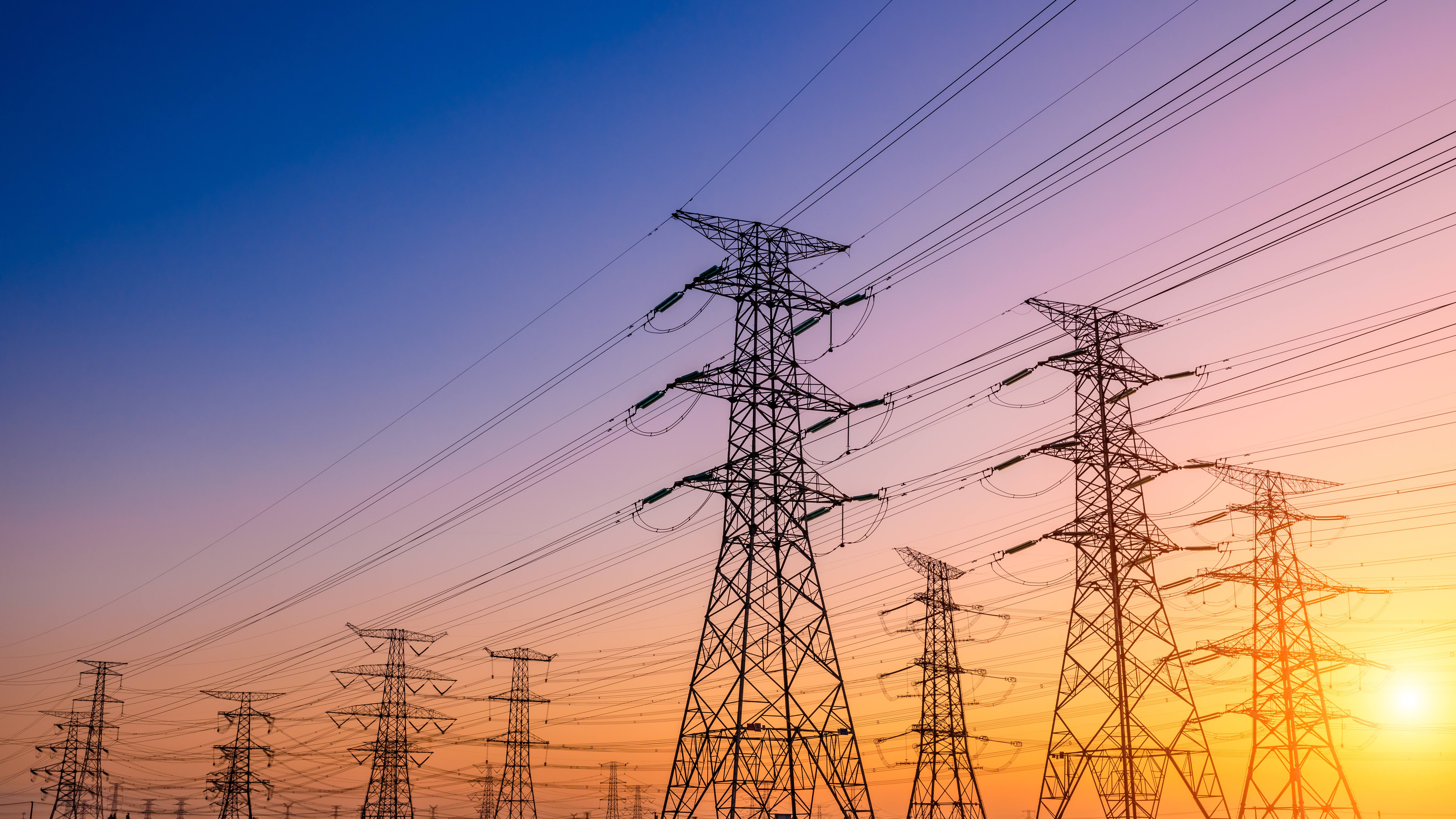
Perhaps the most discussed energy topic in 2025 was demand for electricity spurred not only by the effort to decarbonize with clean electricity, but also significant load growth forecasts to power artificial intelligence (AI) and data centers (more on that in the next section). These seven podcasts offer a sample of topics that CETI and anyone engaged in accelerating the clean energy transition stayed abreast of regarding the grid:
The gas turbine crunch (Catalyst 6/5/25)
In this episode, Shayle Kann and Anthony Brough, founder and CEO of Dora Partners, discuss the reasons why lead times are up to four years or more and costs are increasing for natural gas turbines. A very informative conversation on the complex factors impacting the natural gas industry.
The grid flexibility solutions staring us in the face (Open Circuit 6/20/25)
In a conversation with Arushi Sharma Frank, founder of Luminary Strategies, the Open Circuit team explores the difficulties in unlocking the potential for smart meters to enable flexible load management.
America’s building bottleneck threatens the energy transition (Open Circuit 7/14/25)
The Open Circuit team talks with Brian Deese, the former director of the National Economic Council who is now an Innovation Fellow at MIT, about why the United States’ inability to build is the country’s biggest competitive issue.
Electricity is the new price of eggs (Open Circuit 9/19/25)
With electricity bills up nearly 30% since 2021, Open Circuit and Charles Hua – CEO of PowerLines – take on the hot topic of affordability in this episode. They focus on how the topic broke through in the 2025 election cycle and how smart regulation could cut rates by 20%.
Looking for a turnaround in transmission (Catalyst 11/20/25)
Shayle Kann talks to Rob Gramlich, the founder and president of GridStrategies, to explore how stalled transmission build-out may be easing with the United States Department of Energy’s effort to fast-track load interconnection and other signs of movement.
Why we’re worried about electricity prices (ShiftKey 07/30/25)
Robinson Meyer and Jesse Jenkins give a solid overview of the various trends pointing to rising electricity prices, including policy changes, load growth, supply side constraints like long lead times for building new natural gas plants and increasing natural gas exports, as well as rising prices in organized capacity markets. They also discuss potential solutions. The level of detail is insightful but not overwhelming, and we appreciated the clear-eyed view of one of the year’s biggest electricity topics.
Ann Arbor’s experiment with a new kind of utility (Volts 07/23/25)
In fall 2024, Ann Arbor voters approved a new, municipally-owned “sustainable energy utility” (SEU) to supplement the city’s primary power provider—the investor-owned utility DTE Energy. The SEU will focus on increasing distributed solar and storage that can reduce emissions on the grid, provide resiliency benefits, and reduce electricity prices for residents. David Roberts and Missy Stults, the architect of the plan, discuss this fascinating model for how a community can achieve its energy goals.
It became clear in 2025 that data center growth threatens both the electricity grid in general as well as electrifying other end uses currently powered by fossil fuels. CETI held a very successful decarbonization forum on data centers in April of 2025 and has closely tracked the various issues that data center growth present. These six podcasts offer useful discussions about several of the most salient ones:
Latitude Media held a Transition-AI conference in Boston in August at which the Open Circuit team recorded two valuable podcasts on AI:
How do we know if we’re in an AI bubble? (Open Circuit 10/10/25)
A third AI-themed pod that is well worth a listen explores how to know whether we are experiencing an AI bubble. The Open Circuit team talks to Exponential View founder Azeem Azhar about his recent analysis on bubble dynamics. Azeem has spent the last 10 years looking at what happened when exponential technologies met real world limitations.
The mechanics of data center flexibility (Catalyst 8/28/25)
A potential key to the challenge of huge data center loads gobbling up all the power that the U.S. needs for the clean energy transition is flexibly managing data center load to shave off peak demand and ease grid strain. This is not something that AI companies, with their need for always-on power, have historically been willing to consider. Shayle Kann speaks to Emerald AI founder and CEO Varun Sivaram about the mechanics of data center flexibility in this excellent episode.
When to collocate data centers with generation (Catalyst 9/12/25)
In this pod, Shayle Kann interviews Cloverleaf’s Brian Janous (who participated in CETI’s April data center forum) about why data center developers might not want to collocate natural gas generation with their facilities to sidestep upgrading the grid and the permitting processes necessary for such collocation. Instead, they may consider at a wide variety of non-generation operations that would tap existing capacity.
Unpacking DOE’s proposal to transform data center interconnection (Catalyst 10/30/25)
As we headed into the third quarter of the year, the Department of Energy Secretary directed the Federal Energy Regulatory Commission (FERC) to take a look at fast-tracking interconnection for large loads that could be curtailed or co-located with dispatchable generation. Shayle Kann interviews former FERC Commissioner Allison Clements and Duke University doctoral student Tyler Norris, who got a ton of attention this year for his paper that looks at how data centers could shift when they use energy.
Energy storage is a critical component of the clean energy transition for transportation and the grid. These three Catalyst podcasts were illuminating:
A former race car engineer on battery safety and supply chains (Catalyst 6/20/25)
Shayle Kann speaks with Tristan Doherty at LG Energy Solution Vertech, Inc., who is working to build domestically manufactured energy storage systems for the U.S. electricity grid.
Repurposing EV batteries for grid storage (Catalyst 7/24/25)
This one was a favorite in 2025 because CETI is interested in the waste from discarded batteries. Shayle Kann speaks to Colin Campbell, the CTO at Redwood Materials, which has managed to develop cost-effective ways to repurpose batteries before they are recycled.
The case for sodium-ion (Catalyst 8/14/25)
Sodium-ion batteries have had challenges attaining competitive energy density and cost when compared to lithium-ion batteries. In this podcast, Shayle Kann talks to Peak Energy Founder and CEO Landon Mossburg about the relative advantages of sodium-ion batteries and their path to competitiveness.
CETI thinks that we need to focus more on distributed energy resources (DERs) and virtual power plants (VPPs) as we try to develop energy resources to meet the growing need for power in the Northwest. These four podcasts from Catalyst and one from the Open Circuit gang are well worth a listen:
Making DERs work for load growth (Catalyst 1/9/25)
This interview with Pier LaFarge, co-founder of SparkFund, is a look at how utilities could use DERs to meet load growth more quickly than centralized generation. The idea of utilities leading DER deployment as an integrated part of their system planning is intriguing. The episode makes a strong case for considering SparkFund’s “distributed capacity procurement” model as part of a smarter, more adaptive, and growing grid.
Frontier Forum: Unlocking next-generation VPPs (Catalyst 5/6/25)
Shayle Kann interviews Ben Brown, who is now the CEO of Renew Home and previously led energy product development at Google, about how he is leveraging artificial intelligence and tens of millions of connected devices to build virtual power plants that would provide continuous energy shifts instead of occasional disruptive events.
Is now the time for DERs to scale? (Catalyst 9/18/25)
In this episode, Shayle Kann and his partner at Energy Impact Partners, Andy Lubershane, trace DERs’ circuitous path over the past decade and explain why the time may finally be right for DERs to become a critical clean energy solution.
The new wave of DERs (Catalyst 10/2/25)
This podcast is an excellent summary of how DERs evolved to VPPs and how forces such as load growth, declining system costs, and market structures are impacting DER adoption. Shayle Kannn discusses this ‘new wave’ of DERs with Dana Guernsey, co-founder and CEO of Voltus who formerly directed energy markets at EnerNOC.
Is this moment for distributed energy different? (Open Circuit 10/3/25)
We round out our DER podcast recommendations with this excellent Open Circuit discussion with Andy Lubershane, Partner in Research & Innovation at Energy Impact Partners, about whether DERS will become essential infrastructure for utilities or remain something they eschew.
This year, CETI dug deeply into the many ways to address carbon dioxide (CO2) emissions. These two podcasts offered interesting perspectives on the challenge of mitigating agricultural emissions with carbon dioxide removal (CDR) technologies:
Ag residue and carbon removal (Catalyst 9/25/25)
This podcast addresses the challenge that agricultural byproducts (think wood chips, soybean husks, corn stover) pose as they decompose and release CO2. Shayle Kann interviews Peter Reinhardt of Charm Industrial, the company from which Boeing announced it would purchase up to 100,000 metric tons of carbon removal.
What we learned from the ethanol disaster (Open Circuit 7/18/25)
This is a cautionary podcast about the climate impact of biofuels in which the Open Circuit team talks to longtime reporter Michael Grunwald who has spent years looking at why decarbonizing agricultural emissions remain largely unaddressed.
These three podcasts are excellent for individuals interested in learning more about the basics of geothermal, some common climate myths, and making meaningful change in uncertain times:
How geothermal gets built (Catalyst 5/29/25)
Geothermal emerged from the Trump Administration’s reconfiguring of clean energy incentives with federal support. In this podcast, Shayle Kanne and Zanskar CEO Carl Hoiland explain what it takes to develop a geothermal project.
Less Doom, More Data: Debunking the Biggest Climate Myths (Cleaning Up 9/17/25)
Bloomberg New Energy Finance founder Michael Liebreich interviews Our World in Data’s Deputy Editor Hannah Ritchie about her new book in which she tackles 50 of the most common myths and misconceptions about climate solutions. The CETI team members are huge Hannah Ritchie fans.
How to Stretch Your Impact Without Losing Yourself (The Planeteers Podcast 7/22/2025)
This is a very inspiring podcast about the power of storytelling for climate action. Beth Bannerman chats with Sabrina McCormick, a climate scientist, filmmaker, and entrepreneur, about what it takes to drive change and find joy in a world being ravaged by the climate crisis.
If you want to receive updates from CETI straight to your inbox, subscribe here.



.png)
.jpeg)
.jpeg)